
NYC rapper Jesediah stands at the three-way intersection of language, visibility, and identity
By Aden Rose
Last month, rapper-producer Jesediah sat for a Zoom interview with co-founder of the Humanizing the Trans Experience podcast Aden Rose to discuss his music journey, the power of language, representation politics, and his crush on Tinashe.
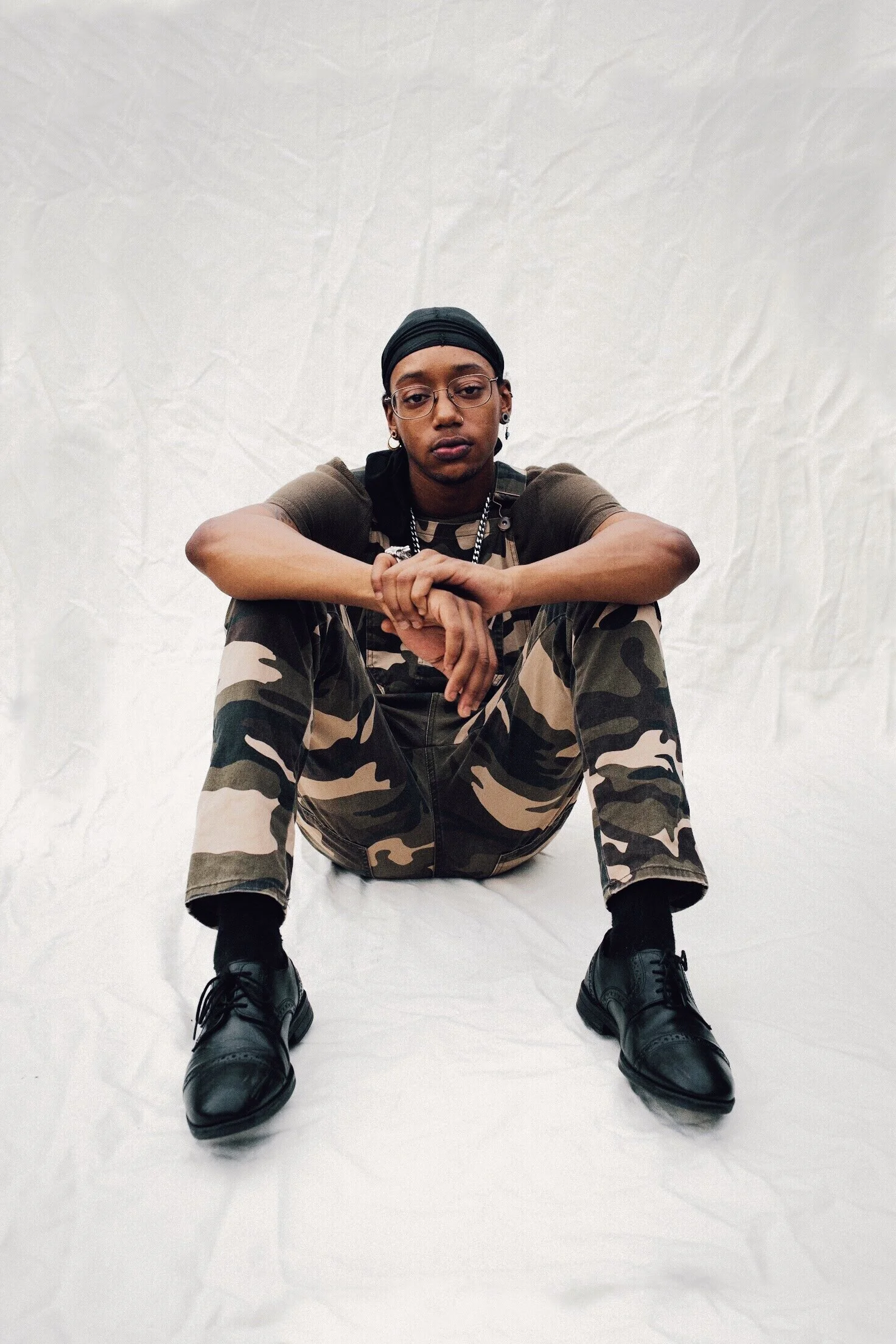
Image courtesy of Katie Rose Peurrung.
Let’s start with introductions.
My name is Jesse. I go by Jesediah, as an artist. I live in New York City. Pronouns are he/his and they/them.
Can you take me through your music journey?
I’ve been involved in music-related things since I was pretty young. I took piano lessons as a kid. I even took guitar lessons for a little bit—for half of a year. When I got a little bit older, I started to experiment a little bit with songwriting and making my own songs. Then, I started producing stuff in GarageBand. I got older and realized that music was what I wanted to do as a career, so I decided to go to college for it.
I went to Clive Davis at New York University, where I studied production, songwriting, and a little bit of music business. That was an interesting—both good and bad—experience as a Black trans man at that institution. Now, I work at a grocery store to do my 9-to-5, and when I’m not there, I’m making music.
You make all of your own beats?
I make some of my own beats, but there’s also some stuff that I didn’t produce. I love working with other producers to get new sounds.
I peeped that you’ll hop on different types of beats and still sound dope. Your style is adaptable, which is something that I look for when I’m looking for artists to listen to.
I try to be intentional about making music that I get excited about. I want to make the shit that I’m interested in making. I can hear a beat that’s different from everything else I’ve made, but if I love it, I’m still going to hop on it.
“I try to be intentional about making music that I get excited about. I want to make the shit that I’m interested in making.”
While we’re on the topic of your music, I watched the music video for “Wuts The Issue.” Can you talk to me about the imagery?
A lot of that imagery came from the director, John Zeng—he approached me with this concept. I came to understand it as this voice in your head that you can’t get rid of. Whether it’s telling you negative things or it’s causing you anxiety, it’s a voice in your head that you want to get rid of. You hit it with a shovel, it’s still there. You’re turning the pages of your notebook, it’s still there.
I interpreted it as a reflection of yourself that’s there. And even though you may not want it to be there, you don’t really have a choice in its existence. It’s going to be there whether you like it or not.
What has it been like navigating the intersectionality of being Black and trans as a music artist?
Even though I don’t write about it in my music, it’s not something that I try to hide at all. My Spotify bio says “Black trans lives matter,” and all of my bios say that I’m trans. I don’t necessarily make music about my experience as a Black trans man—although I sometimes write poems or journal entries—but my Blackness and transness inform the way that I make music.
I often use the same language that a cisgender rapper would use to describe their body or describe their interactions with somebody becasue that’s how I feel. I don’t necessarily feel like I have to change up the language to represent my transness. My transness is represented through that language. I don’t have to prove my transness to anyone via my music. I can make the music how I want to make it and say things how I want to say them and still be valid as a trans man.
“My Blackness and transness inform the way that I make music.”
I love that you’re opening your transness without making it all about your transition. Are there any other ways that your identity shines through when you’re creating music?
I’ve written a lot about relationships, being depressed, and so on. Writing about the “normal” things allows me to be weird. One time at a performance, I was rapping about putting my dick here and there, but the whole time, I was wearing a dress. I was having a blast. It’s not about one monolithic portrayal of myself.
I like a lot of Young Thug’s fashion choices—like the gown that he wore on the cover of JEFFERY. I found out recently that his dad would beat him as a child for wearing girls’ clothes. He’s never identified as trans—this is not me saying that Young Thug is trans—but he’s comfortable breaking through what we have been told that that sort of artist should be doing. That has always been an inspiration to me to do whatever. If one day, I want to go on stage in a dress, I do it. If the next time, I want to wear a suit, I do it. I love taking my shirt off on stage—the little things. Those little things are me embracing my identity.
We all exist on a spectrum in a lot of different levels, whether it’s our ethnicities, our sexual preferences, or our food choices. It’s important to have that representation in a way that doesn’t make people feel like they’re being marketed to.
I just saw a tweet that said, “You’re not being represented, you’re being marketed to.” It’s like, do you actually see and hear people? Or are you just doing the bare minimum of allyship? That’s the distinction we need to make between these companies and organizations. For example, is it actually about Black lives? Or is it about the fact that we are currently alive to spend our money at this establishment?
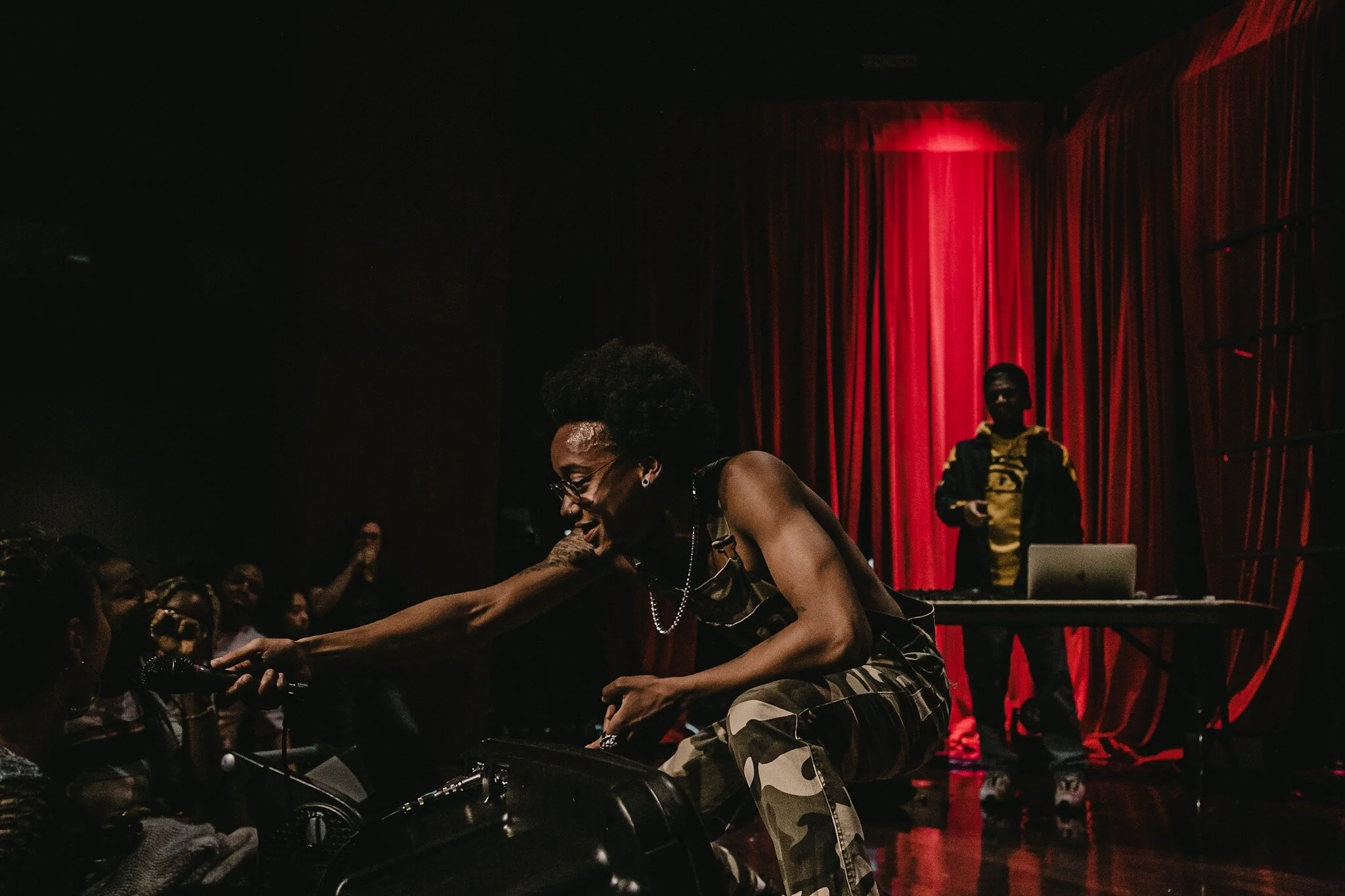
Image courtesy of Holly Grace Jamili.
People like you are so important. I’ll never knock anybody who lives stealth—the majority of the trans people in my life live stealth because they either live in places or work jobs where they can’t afford to be out—but having people who aren’t afraid to exist in their truth and break the binary makes a difference.
I’m not saying I get a plethora of these messages—I’m not about to gas myself up like that—but I love getting messages about my music, but I really love getting messages from people in the community who do or don’t like the music but follow me because I’m out as a Black trans man. That is one of the most powerful things. It pushes me to try to be as visible as possible.
When I was growing up, I did not have that many Black trans men to look up to. The YouTube era of trans men was booming, but the popular ones were all white. The representation wasn’t there. I could never see myself in those people, so that was really hard. Not to get too into the medical aspect of it, a lot of doctors haven’t performed these surgeries on Black trans people. With white bodies as the point of reference, I didn’t know what to expect in terms of surgery results—our bodies scar and heal differently. That’s part of a larger issue of access.
Trans people in general—but especially Black trans people—don’t have the access to get surgeries if they want them, so you have surgeons with no experience working on people of color. That’s how surgeries get botched.
There’s not enough research done on us. Our skin is different. When I started testosterone, my skin was greasy, I was breaking out everywhere, I was ashy, I was dry. I’ve had guys hit me up to ask, “Hey, is this normal? Should I go to a dermatologist?” It’s normal—there’s just not enough research done on us.
That’s why the work that you’re doing to create spaces for us to have these conversations is so important. Community is so important. A lot of young trans people get a lot of their information from community because the information isn’t online.
Back to your career, what triumphs and struggles have you faced throughout your career in regards to being an openly transmasc musician?
I’ve been pretty lucky to not have experienced too much negativity for being trans. It was a little surprising considering the type of music I make and the venues I’ve played with other artists. I think that shows progress. But the one thing that I will say is that I was always—unless I was doing shows specifically geared towards the LGBTQ+ community, like a PRIDE show—the only trans artist on the bill. I did one show at Swarthmore College with Quay Dash, but that was just by coincidence. I know that it’s not for lack of trans talent because I personally know a lot of talented trans musicians.
The same way the protests over the summer sparked the music industry to be more intentional about diversity, booking agents and venues need to be more intentional about diversity. Yes, create the safe spaces for LGBTQ+ specific concerts because those do have a power in and of themselves, but don’t make it so that those are the only events that we’re invited to. Venues should have trans people on their rosters, consistently. I don’t see a lot of that.
Streaming is great, and it’s easy to get your music on Spotify and Apple Music, but the money you make off of streaming royalties is minimal until you reach a certain point. The money that you make off of one show can sometimes double, triple, or quadruple the royalties that you’ll make in a year. Booking trans artists for shows and paying them is how we can put capital into their pockets.
“Venues should have trans people on their rosters, consistently.”
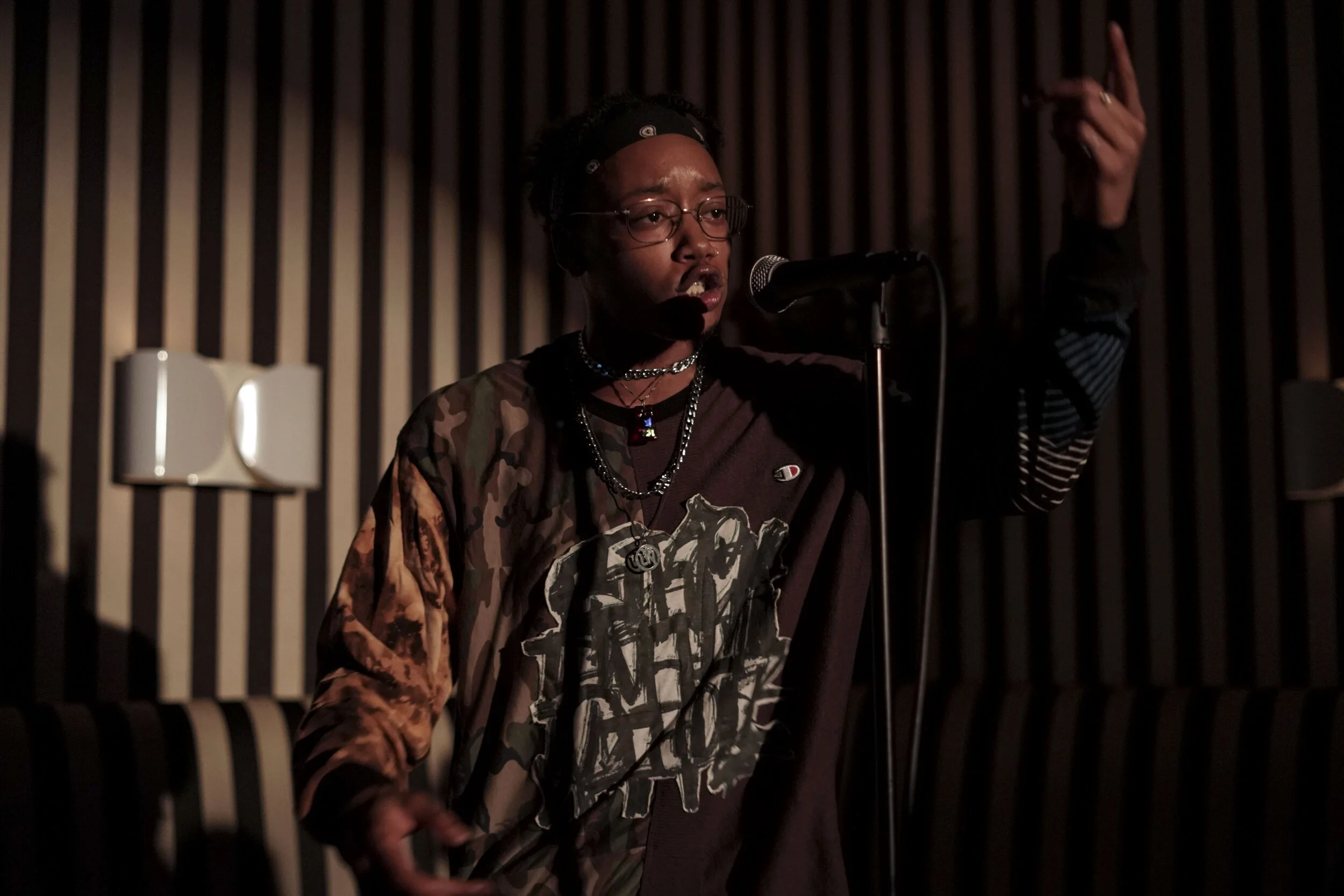
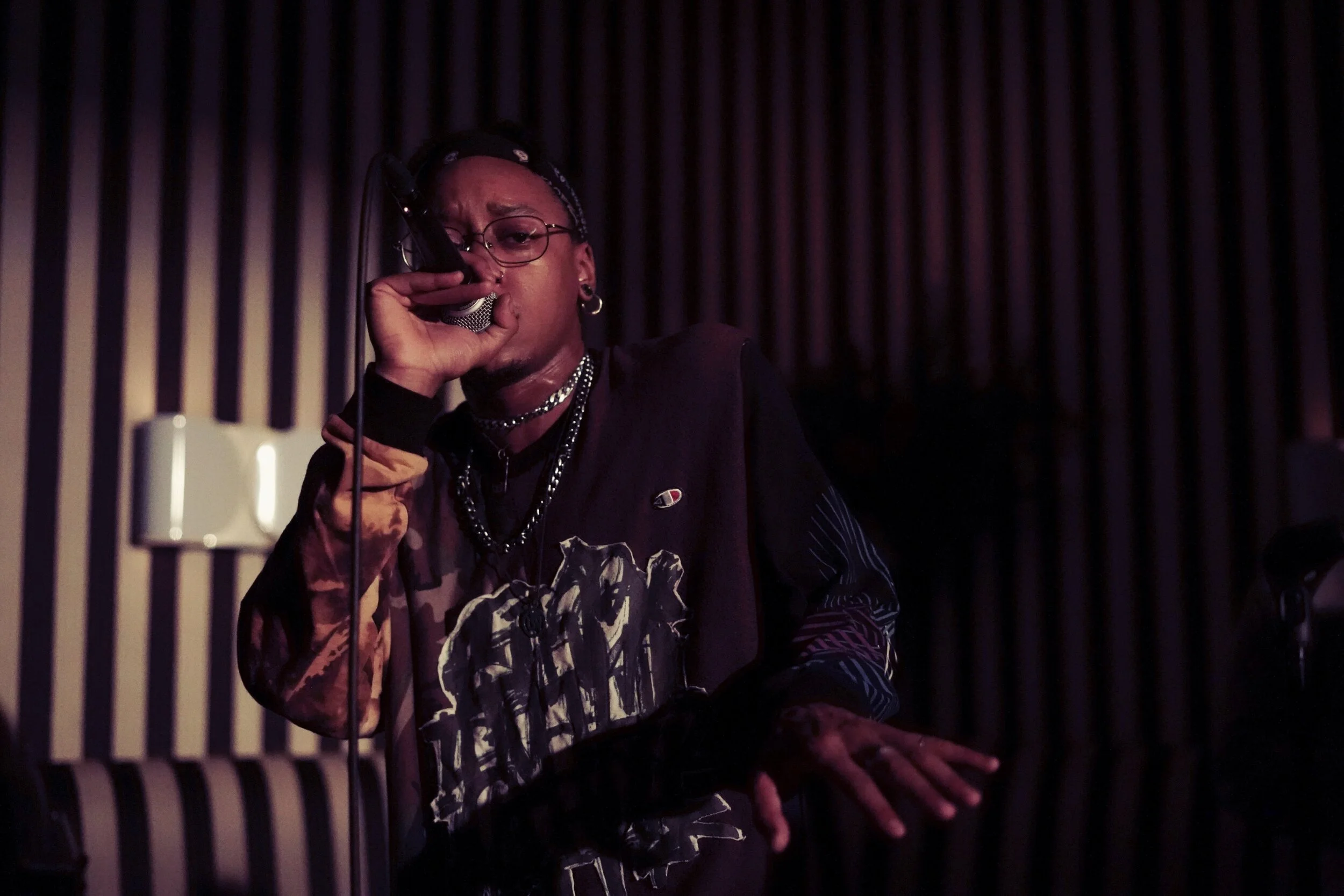
Images courtesy of Sarah Jordan.
Have you noticed any moments in your career when your transness showed up in ways that were beneficial?
I got to do a show for DailyMotion that was really fun. It was very cool to be there with my friends. My friend was my DJ, and my manager at the time was there—he’s also a very close friend—and my girlfriend at the time was there. It was a DailyMotion show for PRIDE. I got selected because I was in the community. That was one of the cool little perks that came with just happening to be trans.
What was your favorite moment on stage at a performance?
I have two—they were both school-related. One time, Tinashe performed at my school, and I got to open for her. I have a giant crush on Tinashe and hope that one day she will notice my presence. I also got to bring a friend—my friend Flannel Albert—to perform a song that we made together called “antarctica.” The show was at Irving Plaza, one of the biggest venues I’ve ever played. Being up there with my friend was sick. And opening up for Tinashe was dope. We got to watch her soundcheck. She’s crazy talented.
The other one was when I was opening for Rina Sawayama. I was performing “G.O.A.T.,” and I put my mic out to the crowd—like, into someone’s face—just for shits and giggles, and they actually knew the song. It was a cool moment for me.
So what does performing look like for you now, with COVID-19 going on? And when are you coming to Los Angeles?
I would love to come to Los Angeles to do a show. I have a lot of friends who live out there, and I just need to get out there in general. I’ve been there a couple times, and I love it. I want to move there later on in life. It’s a great place. Right now, I haven’t done a live show in about a year. The last big show that I was supposed to do before COVID-19 was SXSW, but that got canceled when the virus hit. After that, there were no more in-person shows.
I did some livestreams and pre-recorded performances, but it’s been tough because those shows don’t always generate a ton of money, so it’s harder to get paid for doing things. I did music with this guy Jeremy Lloyd for a PSA about wearing masks, and I got paid for that. I’ve just been trying to do little things. They’re opening certain places back up at lower capacities, but we’re going to have to see how that plays out.
It'll be interesting to see how much venues are able to pay out if they’re only able to hold a certain number of people because obviously that will drive ticket sales down. Maybe ticket prices will go up to compensate. I’m definitely anxious to get back on a stage, but I want to get back on a stage when it’s safe for everyone in the room.
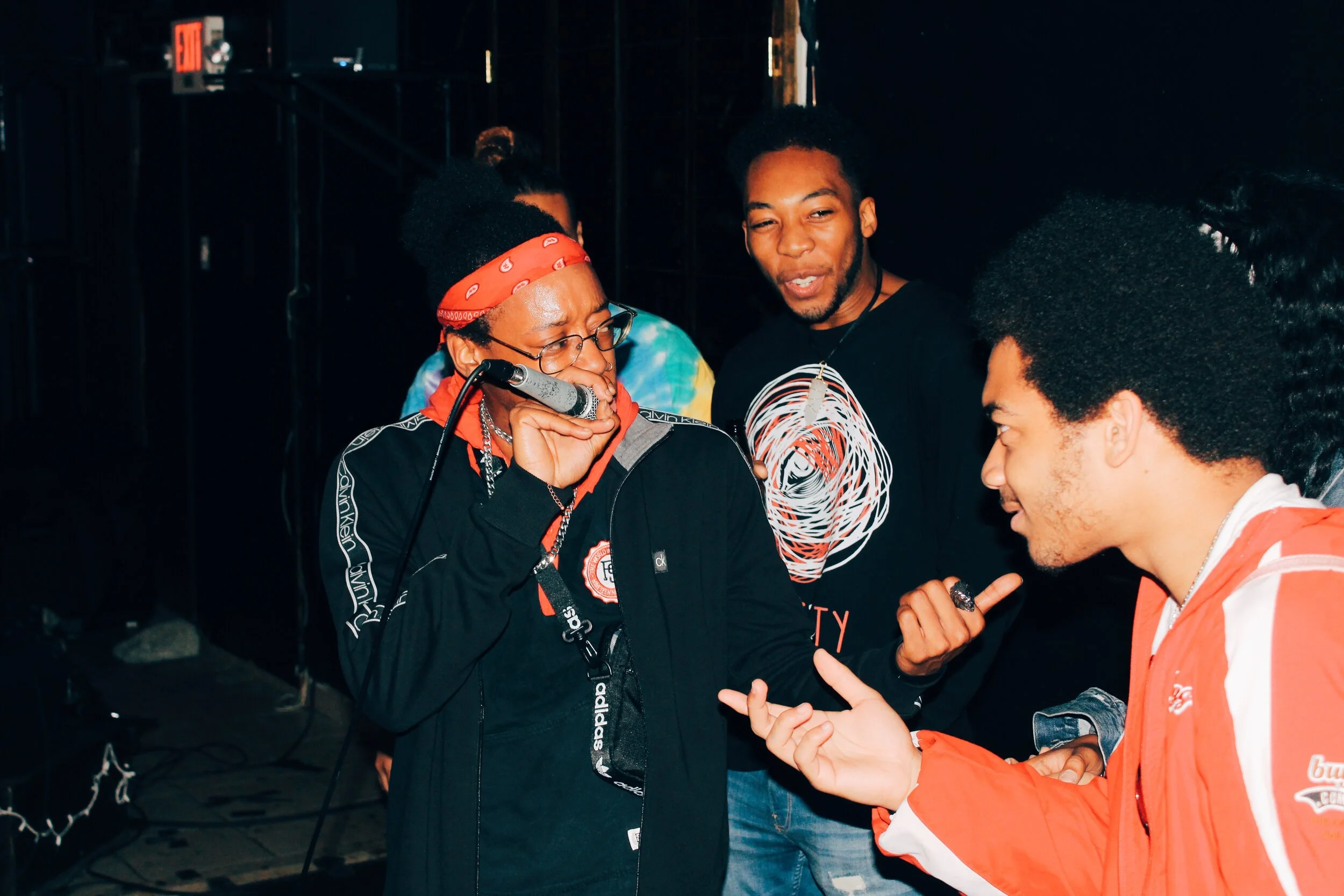
Image courtesy of Jesediah.
Do you have any upcoming projects that you’re working on?
I’m working on a whole bunch of stuff. I haven’t had a recording setup for a little while now, so it’s been a little hard for me to make stuff, but in a couple weeks, I should be back up and running. I’ve been working on an album, a series of EPs, and a lot of singles. I have a lot of stuff in the vault, and I need to sit down and organize it—I need to figure out what’s going to go where and what’s going to come out when.
I have all these voice memos of ideas that I want to flesh out when I get my setup back. I’m not in any immediate rush to drop anything now, but I do have some stuff that’s going to be coming out this year.
Who are your musical inspirations? Is there anyone—living or deceased—that you would like to create with?
I love Young Thug, like I said earlier. He’s a big inspiration. 6lack is a big inspiration. Jodeci, Destiny’s Child, Brandy—they inspired me to layer vocals. As for current people, I really like Lil Baby, Don Toliver, The Kid LAROI. I’ve been listening to some hyperpop artists like ericdoa. There’s this artist, Kazi, who’s just phenomenal. I would want to work with any of these people.
“Even if you don’t listen to the song, if you see the video on Twitter, just retweet it. One of your friends might listen to the song.”
Are there any artists who are no longer with us that you wish you could have worked with?
I would have loved to work with Pop Smoke. He just seemed like good energy. He seemed like he was a cool dude. It was really a tragedy. And JuiceWRLD. I loved his music, and I would have loved to have worked with him. That’s another tragic story.
Is there anything that you want to shamelessly plug?
I always tell people, “Even if you don’t listen to the song, if you see the video on Twitter, just retweet it. One of your friends might listen to the song.” I’m not even going to hold you accountable for listening to the track. Just give it a share because someone else might.
I also want to shout out Jordyn Jay and Black Trans Femmes in the Arts—if you haven’t checked out that organization, you should check them out. They do a lot of amazing things and create spaces for Black trans women and Black trans femmes who are artists. They were actually featured on Beyoncé’s Black Parade website in a list of Black businesses and organizations to support, so you know they’re valid.
--
Aden Rose is a Black trans man from Los Angeles. In his own words, he cultivates safe spaces for Black trans folk—especially Black transmasc folk—to have conversations about their lives outside of their medical transitions. On Clubhouse, Aden offers safe spaces for “open dialogue on topics such as what it means to be a Black man in society after having been socialized female,” and through his upcoming podcast, Humanizing the Trans Experience, he hopes to shine a light on the violence that trans folk experience and the various forms that such violence can take. Consider supporting Aden and Jesediah’s work via Cash App at $thatguyaden and $justayoungblack.