
Indie-pop songstress Shenna has something sweet for your ears
By Ime Ekiko
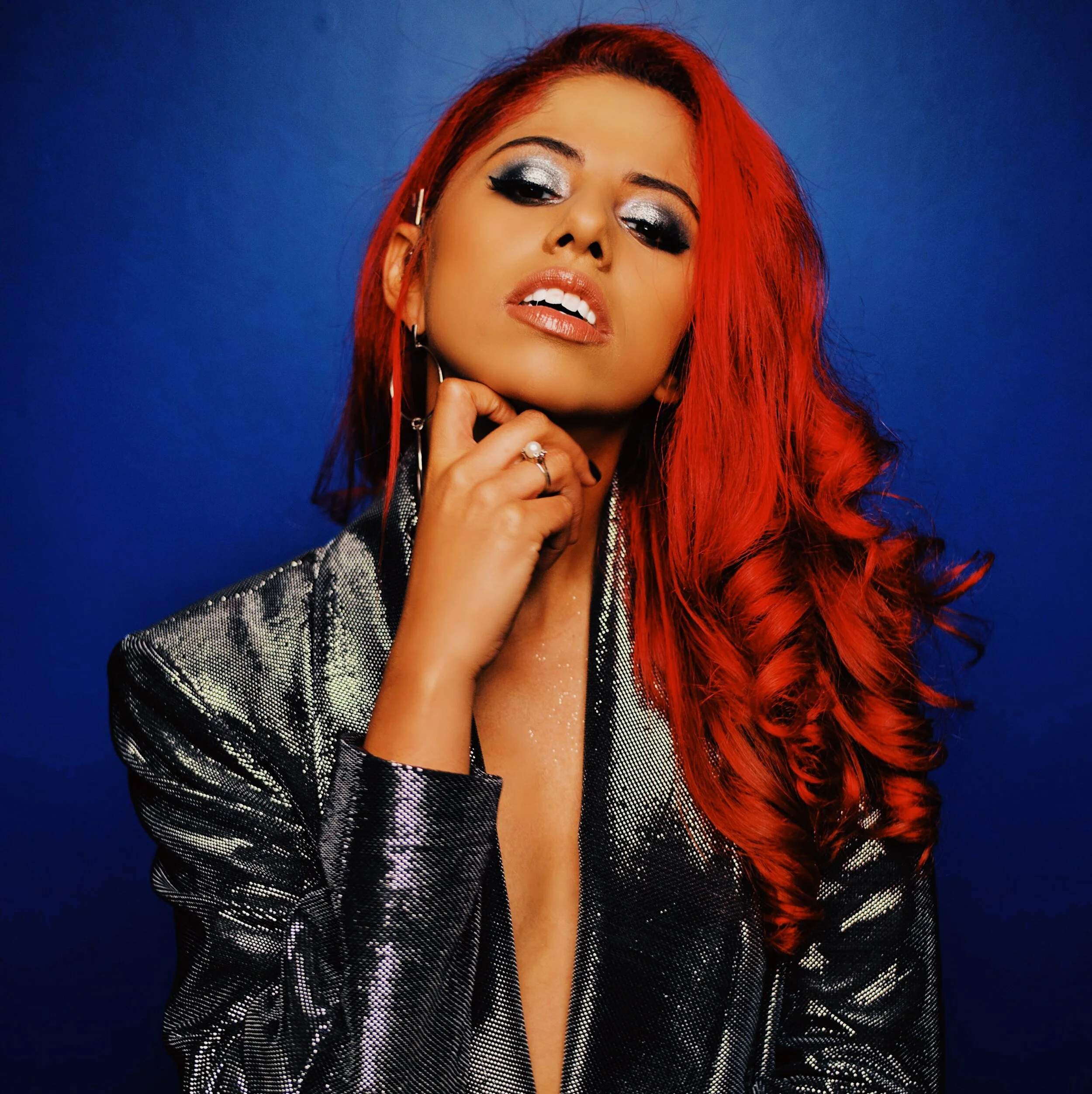
Virginia-born vocalist Shenna is no stranger to hustling. In fact, she thrives off of the grind—and it’s paying off. Despite an almost career-ending vocal injury and dropping out of Howard University, the Syrian-American artist made music her mission and has made her way from the streets of Woodbridge, Virginia to New York City.
Fresh off her clever “Live at Insomnia Cookies” quarantine series, Shenna sat down with SVGE for a virtual chat about her career, Syrian culture, and practicing gratitude.
How would you like to introduce yourself?
My name is Shenna, and I'm originally from a small town called Woodbridge in Virginia. I officially moved to New York around 2015. I went to school at Howard University and I was a music business, jazz vocal major. While I was there, I suffered a lot of vocal trauma and wasn't able to sing as a music major. That really devastated me and put me into a sink of depression. I started writing songs, and that's how I got discovered.
Have you been singing your whole life? How did your music journey begin?
I loved singing, but I was so shy growing up. My cousins used to dress me up and sneak me into their middle schools for talent shows—I was around seven years old. I was like, “Oh my God, I don't want to do this." But it built up my confidence. My first official show was when I was around 13. My family was like, "What is going on?" But I was like, "Yeah, I like this.”
Your family was confused until you made it clear that you were going to sing and wanted to do this. Have you found them to be more supportive since they found out?
My mom was all for it. She was like, "Oh my God, my daughter can sing! Y'all, come to her shows!" My dad is Syrian, so he had that idea of college, marriage, family. He was like, "You're going to go to school and become a teacher—a music teacher." [Initially] I said, “Absolutely not," but I actually did teach for a little bit.
I taught at the School of Rock so I did what he wanted me to do for a second, but I was still a teacher by day and an artist by night. Now, though, he's my number one supporter. I find that so funny.
How was it growing up in Virginia as someone who is both Syrian and Black-American?
I actually had a great high school experience. I [probably] can't think of anything wrong because I kept myself so busy and didn't fit into any one group. But people would always ask me, "What are you?" I wanted to hang out with Arabic kids and be part of their language clubs, but I didn't really fit in there. I'm also Black, so I hung out with my friends—they accepted me 100%. There were definitely also a lot of white people, but I just blended with everyone.
I always wanted to meet somebody like me. I would love to meet somebody half-Black and half-Syrian. I’ve never met anybody else like that.
Would you say that you used music as an escape when you were growing up during that time?
I felt like I was different, so I used it as an escape, 100%. While kids were playing outside, and I would be singing in my room, memorizing Mariah Carey or whatever.
Did you ever go through a period of learning how to accept that you were different?
My freshman year at Howard [University]. I felt 100% comfortable. I was exposed to more cultures—people came from everywhere. I always liked all types of music as a kid, but I really found myself there music-wise. It was awesome. Why had I been under a Virginia rock my whole life?
You mentioned writing songs while you were at Howard when your voice was failing you. How did you heal from that? Where are some of the songs that you wrote?
It was painful to sing. I hid that secret from everybody because I didn't want to be kicked out of the music program. But because of that, I had this raspy tone. My producer, Austin Vello—I met him at Howard—and I started writing songs together.
My first EP was Dream in Color. I loved songwriting and telling stories, but I had no idea how to market myself. I made my first [electronic press kit] and started sending out all these emails. Then I started getting a lot of press.
Because of that, my producer said, "Hey, you're really serious. I'm going to shop this to some sync licensing companies for you." One day, I got a call one day while I was practicing with my band and he was like, “Your song is in this MTV show Finding Carter." It was in Finding Carter, then it was in Bad Girls Club—they were like my first ones while I was still in school. That actually really helped my career.
Now I'm fully healed vocally, but during that time, I built my fanbase. People started following me from those songs, and that's when my career started to take off a little bit. I was getting booked at bigger venues. I needed to transition out of college and just come to New York to work and write full-time.
So you dropped out of Howard to move to New York. How did you come to that decision?
My vocal damage was just getting really out of hand. I didn't even notice at first! My teachers were looking at me like [funny], and I was like, “I can sing, I promise you. I wouldn't have gotten this program if I couldn't sing.” Then one teacher was like, “I think you have vocal damage.”
That was kind of weird timing. When that happened to me, I started realizing I could leave school and still be super successful. I'm all about education, but I was getting all these opportunities that I couldn't go to because I was in class. It just felt like a seatbelt. I didn't tell anybody what I was doing. That was the biggest secret.
I even auditioned for Berklee College of Music and got a little bit of a scholarship. I was thinking that maybe I could do Berkeley online and go to New York—I was trying to find any way to still stay in school—but then the career was going faster than I could think. Some labels even reached out to me.
The best thing for me to do was to go out to New York. I loved New York and wanted to make it happen. My mom was like 100% for it—I did not expect her to say that—but she was like, “Don't tell your grandfather.”
“I started realizing I could leave school and still be super successful.”
What does your life look like now during COVID-19? How are you continuing to make music? I saw you did the Insomnia Cookie's live show.
Artists are getting really creative on their live streams. At [the beginning of the pandemic], I was always so busy. Before it, I felt like I didn't have enough time to really focus on creating. I'm an independent artist, and I don't have a huge team, so I'm always doing everything myself and wearing too many hats sometimes.
Now, I'm able to really step back, write, and enjoy. I fell back in love with music, as crazy as that sounds. I've had time to really focus on my craft—I actually have a studio in my house, where I record my songs. I picked up a ton of hobbies, too, which has been really cool.
When I released my single “Try Another Taste,” I wanted to partner with a sweets brand, so my manager reached out to Insomnia Cookies, and they actually hit him back! My band and I did our thing. It was a lot of fun to just feel alive again. I didn't know how much I missed performing.
Talk to me about your band.
I used to travel to New York City and hang around music schools to meet other musicians? I'd hang around the entrance to Hunter College’s music school and just start talking to people that had guitars on their backs or whatever. That's how I met a lot of my band members— just hanging around the scene. The people I work with now are the same people I started with. If I really vibe with you, I like to just keep it going and help each other out. When I first moved out here, I used to actually sneak into colleges and practice in their practice rooms because I didn't have any money. That was that was my thing.
“The people I work with now are the same people I started with.”
Who are you when you get into the studio?
I really love to be in a room with people. I like to make sure that we're feeling the same thing. There's some sort of connection. Sometimes I'll write a song myself, but if I see somebody else vibing with what I'm saying and I really like their production, then I like the producer to do their thing.
It is 100% collaborative. I don't ever want to be like, “This is my way or no way.” That's not fun to me. It's almost like jamming out on stage together. It has to be able to flow, and you have to feed off of each other.
What are the goals you're focused on right now? Where do you see yourself in the future?
Right now, I'm working on my next album, and I'm expanding my team. That's been really awesome. Like [my publicist] Victoire—she's awesome. I have a manager, and he's awesome, too.
I used to wear so many hats that people thought I had a huge team. I used to write emails for myself, but as Shay or Shannon. I was my own booking agent, my manager, my [publicist]. It was funny, but after a while it just got to be too much. It feels really good to have people who have this as their expertise.
What would you say is your immediate priority as an artist?
My immediate priorities are definitely finishing the album and having everything done before releasing it. A lot of times, I'll have a song that will start doing good numbers, and then I’ll make a music video for it. I want to finish the album so that all my projects have a color theme to them.
The working title right now is Red Rage because I'm having a lot of craziness happening to me in life. There are going to be a lot of venting songs—real, raw.
I first started my career so bubblegum because I was so scared of offending people and just telling my truth. With my last song, “Blue Memories,” I came out and said, "Hey, I have depression. This is how I deal with my depression. Sometimes I feel like I'm stuck in my own thoughts.” It has this dark, moody, pop and R&B vibe. That’s what I'm kind of expanding on. It's something I'm very excited to showcase to people.
You said that you were depressed for a little bit. How did you navigate that? How did that influence your music?
Just be transparent with people. You don't have to tell people everything, but just let people know.
When I started doing that, that's when I started getting the most eyes on me, and it wasn't in a bad way. I always thought, “Oh, my God, they're going to find out. This is going to be so weird. People are going to be in my business." But I have so many friends and fans open up to me and say, "Thank you. I [struggle with depression], too." It just felt good.
What I do when I'm feeling that way is write a song or write poetry. I do a lot of meditating now. I think about the positive moments, and I remind myself that I'm making a difference, whether it's small or big. I think that means something. I feel like people need to do that more—remembering that one moment or that one person you may have made a difference to.
How do you show gratitude to yourself? How do you show gratitude to your family? To your team?
I tell people, all the time, that I appreciate them.
I'll tell Victoire, “You're doing amazing. Thank you so much. You could do whatever you want, but you're taking the time to make sure that I'm succeeding in my career. That means so much to me.” Same with my manager, same with producers or whoever is taking the time. Even with fans. I write people back all the time like, “Hey, I appreciate you buying my merch. It means the world to me.” It makes my day that they care. I like to check up on people. I don't just call people to say, “Hey, I need a favor.”
What does success look like to you and how do you measure it?
For me personally, success is just being happy. It’s being super happy about where you are in your life. Success could be being a teacher or going to your 9-to-5. And that's awesome. I want to just be happy—that that's my main thing. It’s so hard to be happy sometimes that I have to take a step back. I noticed that when I started traveling overseas and just taking in those moments.
“For me personally, success is just being happy. It’s being super happy about where you are in your life.”
Where are your favorite places that you've traveled so far?
I've been on tour in London and Japan. I've been to Paris, Korea and I've also toured to Canada. And I think, “Wow, I made this happen. I'm successful. I'm happy.” That's what I feel. Whether I have millions of dollars or not, I'm successful enough in my life.
Who are your greatest musical influences and who are your most unexpected influences?
I love Corinne Bailey Ray. She's one of my favorites from the UK. I love her songwriting process and just the rawness in her music. She’s had the best live show I've ever seen.
I love Lady Gaga. She is top-tier. I feel like we could just be friends—you can just tell that she's cool, just sitting there no bra on talking to her friend. I love when people show their real personality. I love her creativity, her writing process, her singing. I listen to Bruno Mars. I’ve been listening to The Weekend a lot recently—[I loved] the whole character that he created for his album.
As an artist, I love creating an identity and it's still your personality when you do interviews and stuff but on stage and in music videos, it's a character, it's fun. It's like dressing up and that's what he did.
What is your greatest fear and how do you push through it every day?
My greatest fear is leaving this world and not having my music spread throughout it. I make music to heal people and help others get through what they're going through.
The key thing in my music is individuality, mental health, and being 100% who you are. I want that to really resonate with more people. I don't want to let them down. That's actually a bigger fear: I just don't want to let people down. I don't want people to look up to me and then [be disappointed] if I do something crazy someday—I'm trying not to.
As a Syrian artist, do you pull any influences from Syrian music?
I went to Syria for the first time when I was in middle school. I had no idea what to expect. I remember my mom got me hijabs, and when I got there, they pulled them out of the suitcase and started laughing—they were just so glamorous and flyer than me, so they said "What is this?!"
Every night they would sing in Arabic and dance. They showed me a lot of the popular artists—there’s one in my next album. I'm actually going to put some Arabic in it, too, even though I understand it more than I can speak it. I do listen to Arabic music so I understand what they're saying, though. I'm going to use that as a starting point.
Do you have any desire to go back to Syria at any point?
Oh, yeah. I love it. I know all this stuff is happening now, but [I love how the] culture is so family-oriented. It's a different kind of love and appreciation—the food, the family, the respect.