
New school titan IDMAN is championing community and liberation in her music and activism
By Chioma Nwana
Although she traces her roots back to Somalia, singer-songwriter IDMAN is somewhat of a global citizen. Raised by Canada, the United States, and Kenya, the Los Angeles based artist is using music to explore culture, language, and connection across borders.
Last month, IDMAN released her debut single “Down For It,” which—to her surprise—became an international success almost overnight. We caught up with The Remix Project graduate on Zoom to discuss vulnerability in music, honest activism, and her next moves.
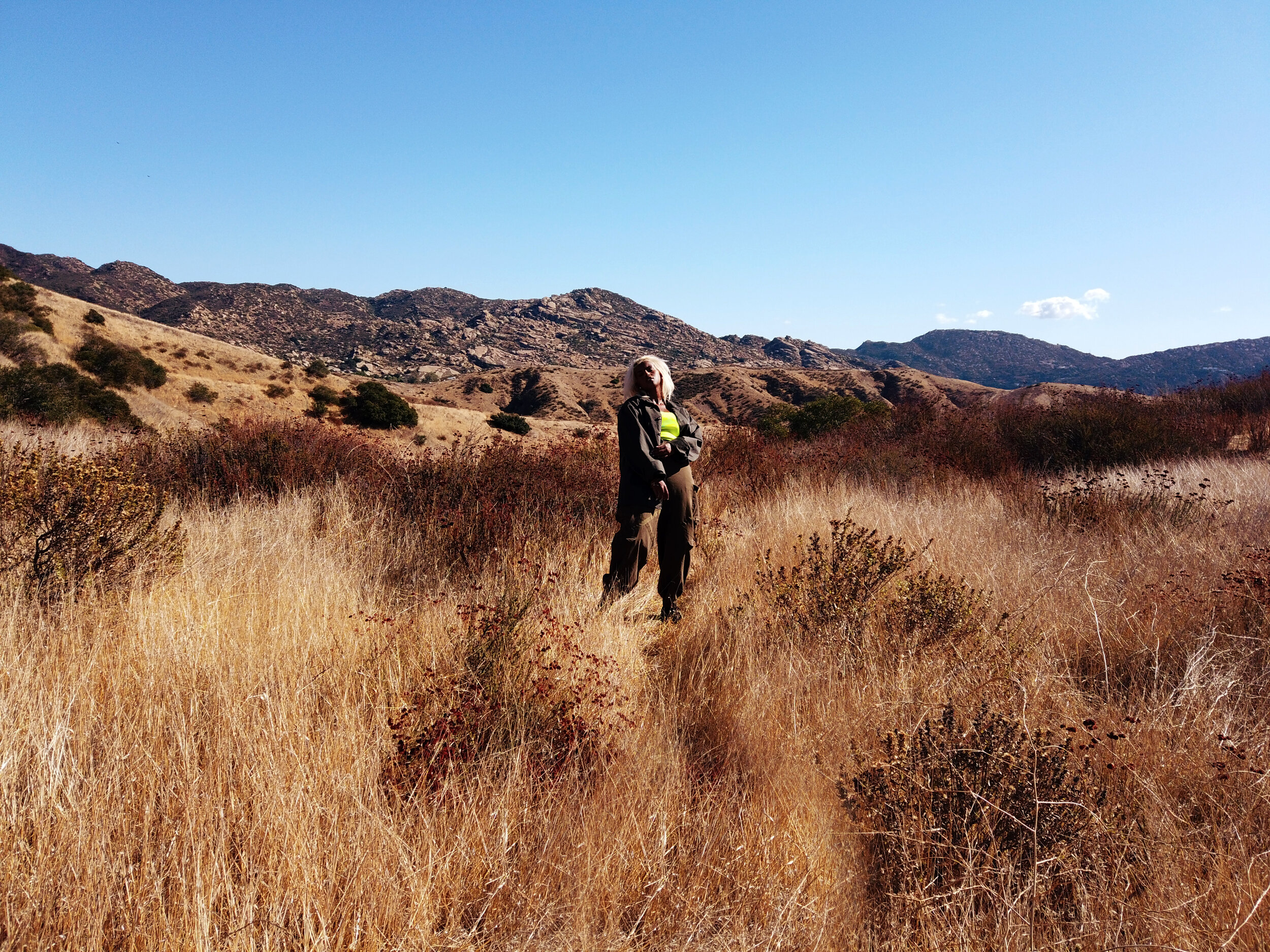
All images courtesy of Dara Heng.
Before we get started, can you please share with our readers the correct way to pronounce and honor your name?
It’s Idman. The “d” sounds like a th, and “man” is pronounced “mun.”
You’ve officially introduced yourself to the world as a recording artist. Who is IDMAN the artist? Is she an alter ego? Or is she simply an extension of the person that you’ve always been?
I think IDMAN is someone who is on a journey to figuring that out for herself. It’s my hope that through this art stuff, I can move through the things. It’s my real name. It took me a really long time to hold people accountable to pronouncing it correctly. I think that was me wanting to learn how to honor myself and honor what makes me who I am and where I’m from. I hope that through music, there can be this dialectic relationship between myself and listeners—they come with me while I try to figure it out.
It’s important that you hold people accountable to pronouncing your name. What do we have, if not our names?
Warsan Shire is one of my favorite poets, and she said, “Give your daughters difficult names. Give your daughters names that command the full use of tongue. My name makes you want to tell me the truth. My name doesn’t allow me to trust anyone that cannot pronounce it right.” I never used to [hold people accountable], but hopefully we can model what that looks like.
Many artists choose to kick off their careers with bold, declarative statements of unwavering confidence. Meanwhile, “Down For It” explores doubt and the restorative power of gentle self-affirmation. What led you to put forth such an honest piece as your debut single?
I think it’s because that’s who I am. I have diagnosed social anxiety, so this is the wildest career to want to foray into, but I think that what stabilizes me is honesty and transparency. When I can speak my truth, my truth can be accommodated—I give other people the opportunity to meet me where I’m at. It feels really good.
I won’t lie and say that I wanted to start with this single or come out of the gate saying these things. You don’t just walk up to people and tell them what your weaknesses are. But I think there’s something really cathartic about being able to say, “Hey, this is what I’m coming in with. Can you meet me halfway?”
“When I can speak my truth, my truth can be accommodated—I give other people the opportunity to meet me where I’m at.”
In just one week, “Down For It” garnered over 60,000 streams across platforms and made its way to about 100 countries. I can’t even imagine what the numbers are looking like for you now. How does it feel to make this kind of impact so early in your career? How do you define impact?
To say that it was shocking is an understatement. We went into this with no machine. We didn’t even decide to put out the song until three weeks before it came out, so everything that everyone saw was created in that three-week period. Our creative director was leaving the week after we decided that we were doing it, so we had days to figure out what the rollout was going to look like. My goal was, “If 200 people heard it, that’s cool.” That was the benchmark.
This was the biggest risk I ever took in my life. If risk ever met reward, this is what it is. Impact to me feels like resonation. We can put all of this labor and time into doing a really cool rollout, writing these songs, going to the studio, and laying down records, but it doesn’t matter if it doesn’t resonate with people. People have to decide that. It’s been really gratifying and affirming to see that folks are resonating and responding with this kind of support. I’m shocked and super grateful.
Your benchmark was really 200 people?
That’s what I thought. I’m new to social media. I was like, “If a poppin’ photo is gonna get 200 likes, then I can hopefully expect 200 listens. Maybe 100 people will listen twice.” Those were our goals because we literally had no expectations going into it. We had hope and faith, but we can’t control how people are going to respond. We don’t have a hookup or someone on the other side helping us out. This is just people power.
Everyone on the team is 10 times more talented than I am and 10 times better at everything that they do. Iris and Sami are powerhouses, Dara is a machine who doesn’t stop, Racquel and Warren are the meme where Kermit is typing frantically on the keyboard. Without them—without Golly Geng—none of this happens. At the core of it, it’s our friendships, it’s our relationships, it’s everyone’s commitment to trying to be their best selves.
How did you go about building your team and developing trust?
Nobody on our team met each other with the intention to work. We all met each other with the intention to get to know each other as people. Racquel was a fairy godmom—she was there at the root. Iris is my best friend from back in college in Maine.
I met Sami through [The Remix Project]. I had gone back to visit, and the director of the program was like, “Have you met this girl named Sami? She’s a machine, and she’s Somali.” Dara was in my program. We didn’t talk the first year of the program, but we knew of each other and would hit each other up on Instagram from time to time. I would put him on all of my imaginary decks for whenever I was ready put a team together—he’s who I wanted to work with on graphics. Warren is someone who has consistently checked in on me and been like, “Are you creating? Are you writing? Are you eating? Are you taking care of yourself?”
I think the coolest thing is that we all are presented with the opportunity to do this thing together. The universe has conspired to ready us all at the same time. The ways in which we’ve all come together have been really seamless, and I think that the work that we’re putting out is a testament to how comfortable we are with each other, how little ego matters with one another, and how we’re aligned by similar core political values and similar intentionality around how we want to interact with this industry. We’re super duper lucky. They’re all amazing, and I’m so grateful to be at the receiving end of their collaboration—our collaboration.
Prior to music, most of your work took place within the realm of social justice and global Black liberation. What did that work look like? How did you find your way there?
I grew up in Toronto, which is at least 50 percent foreign-born. It’s a majority immigrant city—I’ve been in classrooms that had 28 kids and 38 nationalities represented. For high school, I moved to Nairobi and was an international student in Kenya. I went from somewhere that a lot of people looked like me to somewhere else that everyone looked like me.
Then I did undergrad in Maine, one of the top three whitest states in the country. There was a culture shock from being the only Black person in the room. I was wearing hijab at the time, so I was the only hijab-wearing Black woman in most—if not all—of my classes. There were maybe 20 students of color that I would see at the campus centers.
In a situation where the contrast is that stark, you have to get to know who you are. It shocks you into figuring things out because you’re presented with a lot of situations where folks will project onto you. I had never been around people who were so micro-aggressive and macro-aggressive. To this day, I call Portland, Maine the country’s capital for polite white supremacy. I think for survival, I was trying to figure stuff out, but I didn’t have language or access to the things that would allow me to express what I was feeling.
After the murders of Mike Brown and Trayvon Martin, my friends and I started the Portland Racial Justice Congress. We moved on to work under the Black Lives Matter umbrella as a chapter that was working in solidarity with everyone across the country. We continued doing that work from 2013 on.
I caught my charge in 2016, during my last year of undergrad. My friends and I planned the biggest mass arrest in the history of the whitest state, for Black lives. Maine is the state where the Ku Klux Klan first started, so it has huge ties to a lot of the racial underscores across the country. When I caught the charge, the case was super publicized. I got arrested with 18 other people, but five of us were Black women, and we had 200 percent more charges than everybody else. It was one of the most traumatizing times of my life.
A year or two before that, I had met with one of my mentors who was like, “You should do music.” Even with the idea of possible deals on the table, I was like, “Nah, the streets need me. That’s where purpose lies, and that’s where my labor and my service to folks is going to be best utilized.” I don’t think I saw it for myself until I couldn’t leave my house for a year because of court stuff and being out on bail. I had the opportunity to reflect—with the help of folks in community—on what it means to be in service to community through means other than just direct action.
Through the advice of elders, I came into the understanding that our people have survived for centuries under oppression and abominable violence. Something that has helped to sustain us is the joy that exists within pockets like music and dance. That, in and of itself, is super purposeful and important. Still, I’m going to continue to figure out how to make sure that my art isn’t just something that coincides with it but is immersed in it, reflective of it, and comprised of that intentionality.
I’m glad that you came to the realization that just because you’ve changed the avenue through which you do your work doesn’t mean that you’re not still doing work.
It’s hard. I feel like we still have so much to see as far as how work and service can look like. I look at ancestors like Nina Simone, who spoke to the fact that it is an artist’s duty to be inherently political and to be reflective of the times.
I think that’s a really cool thing that’s happening right now—it’s always been happening, but we now have so much more statistical backing for the fact that Black culture is the most consumed through music. There are ways to hide the medicine in the music and be responsible and accountable without having to be like, “Power to the people!” It’s through creating honest art. It’s through creating representation, not for the sake of being seen, but for the sake of dismantling and being disruptive.
“Something that has helped to sustain us is the joy that exists within pockets like music and dance.”
A lot of people step into leadership roles and perform activism in a thinly veiled attempt to center and promote the Self.
I think celebrity culture is dying, and rightfully so. Coming from a movement space, this is weird because all I’ve ever been taught is, “Don’t take the mic.” I feel like a lot of people want to step into place and be a false idol or the fixture for what all answers look like. We still don’t have good models for what it looks like to be in leadership in these spaces.
It shouldn’t be centralized—it shouldn’t be one person. A movement cannot exist in one person because we’re not monolithic. Decentralization is the way. None of the people that we have speaking on our stuff are the people who should be. The responsibility and duty is to pass the mic to folks who are that much more marginalized and can speak to more than I could ever speak to. I’m super wary of folks who want to stand on a podium and speak for everybody.
I hope that as much as you have learned to not take the mic, you’re also—as a Black woman—feeling like you deserve to take up space, especially now pursuing music.
It’s different in the music space, for sure. I think I’m learning to feel worthy and deserving, which is why I’m trying to be as honest as possible in this art. With thinking that I’m deserving and worthy, I’m also thinking that my stories, my perspectives, and my lived experiences are worthy of sharing. I’m honored that there are people who are listening, supporting and championing me as I lean into what it looks like to feel deserving.
“I think celebrity culture is dying, and rightfully so.”
Every movement has different players—folks who organize, folks who work to create policies, folks who disseminate information, and the rest. Have you figured out the role that you play in the larger liberation movement?
The biggest role that I can play—that we all can play—is one that is willing to change and be malleable to what the circumstances are. I think that my role will change throughout the course of my life. I’m still coming into figuring it out, but how I also stay accountable to that line of thinking is by making sure that I’m accountable to the homies who are still doing direct action work or doing direct policy work or are out there talking to folks.
I have a really cool and trusted panel of people that I check in with, I call when I want to make a big decision, and lean on for advice. Being constantly in relationship to a movement throughout the last few years and having the commitment to continue to do so also lies in making sure that the relationship is one that I pour into and water as best as I possibly can.
You were born in Toronto, but you’ve spent time in other places as well—namely North Carolina, Nairobi, and now Los Angeles. How did these vastly different cultures shape your world view? Will we get to experience your world view through your music?
North Carolina is where I learned to talk. I was there from when I was one to four or five. Somali was my first language. I lived with my grandma and all of my aunts and uncles who had just come from Gedo [in Somalia] after fleeing from the war. A lot of first-generation kids can’t speak Somali, but even though I was born in the West, because of that time with my grandma and my family, I can speak in my language, and now I’m trying to write songs in Somali.
Living in Kenya exposed me to music from the continent and to music from all over the world. A lot of people don’t understand that a lot of the world back home interacts with the rest of the world way more frequently than they do here in the US and Canada. We were watching Turkish shows and Filipino shows. My taste for worldly music is definitely influenced by the places that I’ve been to. I think that it influences the way that you perceive the world when your relationship with word and language and mother tongue is so intertwined with movements.
I think that one of my favorite songs on the [forthcoming] EP is an answer to the question of what it sounds like to have contemporary music coming out of East Africa that’s in English. I think that was something that was missing after watching The Lion King and seeing all of this incredible movement for afrobeats coming out of the continent but having no actual examples of what the music coming out of that region—the region that I’m from—sounds like. It’s given me purpose and footing to stand on when I think about why I deserve to be able to add to the musical or cultural zeitgeist.
In addition to graduating from The Remix Project—the distinguished Toronto arts incubator known for alumni such as Noah “40” Shebib and Jessie Reyez—you also received mentorship from production powerhouse Salaam Remi. What, to you, is the value of the student-teacher relationship in the music industry?
It’s literally the reason why I’m here. I call all of my teachers my fairy godparents. In teaching me, they are making me understand what purpose feels like, what legacy looks like, and what impact looks like. They’ve taught me that after we—me and the homies—figure this stuff out, if we’re not able to redistribute everything that we’re learning on this journey, then it doesn’t matter. If somebody else isn’t then able to take this information, replicate it for themselves, and redistribute it too, then we lock a chain of movements that are the opposite of gatekeeping.
Rich Kidd, a Canadian powerhouse producer, literally took me under his wing. He’s this big, burly, [cis-gendered, heterosexual] dude who was like, “I’m going to talk to you about pronouns. I’m going to talk to you about what it means to be non-binary. You have social anxiety? Let’s talk about disability accommodations.”
[The Remix Project] is really competitive. I had never stepped in a studio before, I had never held a mic. Other than Salaam and a couple other people, I had never sung in front of anyone. My teachers there and other people in the music industry—for example, Racquel, a former SOCAN A&R who is on our team now—ushered me into understanding what the variables were, what was at play, and what my choices were. They empowered me.
Everybody who’d ever talk to me about the industry only talked about boogeyman—the people who are dwelling in the shadows, waiting to prey on you. We’ve been super grateful to know that we’ve come along and intersected. I’ve met a lot of amazing people who have modeled to me what my responsibility to others looks like going forward. They’ve set the bar really high, and I’m honored.
I can’t wait to shout it from the rooftops and give them their flowers in real-time. There is no IDMAN without Rich Kidd, without Annalie, without Racquel, without Warren, without Sami, without Iris, without Dara, without MixedByOTR. I walk into every room with them on my shoulders. I am the summation of all of their time, labor, emotional efforts. I’m honored. They’re the best.
You’re currently working towards independently delivering your debut EP at the top of the new year. What themes and soundscapes should we expect to receive?
Going off of the ripples of “Down For It,” I’m giving people an EP that is my invitation to my rough drafts. I don’t think I’m creating the best music of my life, but I’m committing to the journey of figuring out what the best music of my life will sound like and look like. I’m figuring out what my sound is. I’m really new to this.
I’m like a small fish in this really big sea, and rather than try to figure it out in secret, I’m coming into this wanting to take the journey with people. I have time to make up. I’m not starting out in the music industry at 17 years old, so I want to make up for what that origin story looks like by bringing people along with me. If this project sounds nothing like project three and project four, that’s fine.
That’s a journey that I’m willing to be on, but not alone—with the folks who are willing to give us their time and their support. I hope folks are able to resonate with why the songs sound so different. They’re all about different thoughts and different feelings. We’re all dynamic people, and hopefully this EP speaks to the breadth of feeling, emotion, and humanity.
Is there anything else that we should look out for in 2021?
We are going to try to take the story that we’ve been building sonically and turn it into a four-dimensional experience for folks. I’m really excited to share all of the visuals that we have planned. We have a really cool predominantly BIPOC, trans, queer filmmaking squad, and we’re really excited to get these visuals to folks. We’re really excited to extend storytelling into visuals. We hope that people care and that they watch and support.
I like that you’re taking the initiative to ensure that the work you’re doing is built with a team that represents the world around you—a world that includes folks who are BIPOC, trans, queer, disabled, and so on. I’m glad that you’re seeing that and are setting the precedent now to create work that is reflective of it all.
Thank you for seeing it as such. Our team looks like this because these are who my homies are. The art is going to be created by us because that’s who the music is for. I write with us in mind, we create with us in mind, we’re releasing with us in mind—not even just in mind, but prioritized and, hopefully, loved on. I can’t wait to love on us, unapologetically, on-screen because we need that. That’s documentation. That’s archival work.
“I can’t wait to love on us, unapologetically, on-screen because we need that. That’s documentation. That’s archival work.”