
Representation beyond the now: how Michael Rotimi of Offshore proves diversity is more than a phase
By Lum Mawun
Philly native turned Brooklyn resident, Michael Rotimi contributes to the fight for inclusion through his talent management, casting, and mother agency, Offshore. Here, he and his team represent a diverse range of multi-dimensional models and creative individuals who are more than mere faces, but individuals with stories and talents to share with the world. We hopped on a Zoom call to talk to Michael about how he’s sorting through the times, his personal and professional efforts towards representation in the industry, and how his company plans to adapt to the heightened digital age.
So, how are you? There’s a lot going on and a lot of different things to feel.
I’ve managed to stay grounded. I never was one to spiral in my thoughts too much. With the whole quarantine thing, because I always worked from home, it wasn’t too bad having to adjust. I was just trying to push through the first month, you know? I had a routine and everything. After the third month, it just started to feel like, “Damn, it’s weird.” With the world slowing down, I just started sleeping in more and watching more Netflix, since I wasn’t as busy. Work slowed down for me. At first, I was organizing documents and files, going through my Dropbox, and cleaning my laptop and stuff — even updating the site. Once I did all that, I was just reading and working out for the most part, since there was nothing else. Then we got hit with the George Floyd movement. That was another layer. I’ve been supporting every cause that came out of that, of course. I went to few protests.
How was that, protesting during the virus? I can only imagine.
I’ve only been to two just because we are still in a pandemic. We can’t forget that. It’s kinda weird because at protests, everyone wants to come together, support each other, and have that connectivity. But there’s this barrier because of the pandemic, so we can’t fully embrace each other how we want to. People were trying to make it work. We tried to be six feet apart, even though it wasn’t really like that. All you can do is wear a mask and pray — pray for the best. That’s pretty much how these last few months have been. I’ve stayed grounded and healthy as well.
You mentioned you worked on the website — it looks amazing. I’ve never seen a casting website look like that. What inspired you to create a modeling agency? I remember you when you used to hang around OXOSI, you were doing creative direction-based stuff. Your agency feels like the next step.
When I was at OXOSI, I was freelancing with a friend of mine who I worked with closely at the time. We met in Philly at Temple University and were just kinda like, “We’re both creative, we’re both Nigerian. Let’s stick together.” I did some casting for OXOSI that my friend, Amara, would shoot. At the time, Offshore was in its infant stages, beginning out and just doing casting. I feel like when you find other Nigerians, you stay close, especially if you’re creative. It was kind of like a family thing, so It was fun.
Most people would automatically jump into starting a production company and creating the end product. It’s interesting to see someone focused on the backend and doing the tedious work — from finding the models all the way to issuing payment. That’s not often explored.
There’s a lot of moving parts to it. There’s a lot of paperwork and emailing. People think, “Oh, I’d love to sit and reply to emails all day,” since you can do it from home. But it’s honestly not that great. I hate emails now. You can lose the whole day to emails. You feel like you’re being productive but, it’s not really productive. You’re getting things done, but you spend too much time away from the actual business [trying to] grow the business instead of maintaining the business. For me, I just hate being on email because I’m losing time [that I could be using] to grow Offshore or do things I can do for the future.
Image courtesy of Offshore Agency.
“At the end of the day, I think they have to get more people of color on the team — specifically Black people — to cast campaigns and art direct.”
You all seem to be growing. Do you have a team that helps you?
Yeah, we’re growing at a steady pace. I’m definitely happy with where we are, especially with me not having any professional background and just [learning from] trial and error. Right now, I have three model agents and an assistant. It’s a new process for me, training people. None of them have any experience in the industry or with being agents, so I’m having to relive what I did and train them on how to do it. It’s been kinda tough because a lot of the stuff is second nature to me, so I just expect things to be common sense. But you really have to strip it down as if you’re teaching someone a language — that’s really what you’re doing if it’s something new to them.
Do you find it hard having to go backwards and put yourself where you were so long ago?
It’s not so hard. The hard part is articulating it so they can understand. I know everything I did and the steps I took to get to where I am, so now I just have to put it in a language. For example, I may explain something to all four of them and maybe only one of them will understand, but the other three of them won’t. I have to figure out a universal blueprint so they all can understand. That’s been the toughest part.
How have you and your team sustained your day-to-day to routines amidst the physical distance and emotional stress throughout quarantine with the two ongoing health and social pandemics?
Since everything stopped, we were checking in on the models, seeing how they were feeling and what they were up to. There was actually a project that I was going to work on before the pandemic called “More Than a Face.” It’s a documentary showing what the models do beside modeling, their home lives, and what they’ve been doing so people could get a better feel of who they are. Kind of like a “Behind the Music” type of thing. I planned to put everything together and put out a documentary on the talent.
You could still do it during quarantine.
I think I am [still going to do it].
The Offshore model roster displays a wide range of beauty. This is pretty rare, unfortunately. What do you think about the recent commodification of representation — that is, how it has become a recent trend to use representation as a marketing tactic?
This industry is definitely whitewashed. White people own the industry. It’s their job to make the changes and really implement long-term change. At the end of the day, I think they have to get more people of color on the team — specifically Black people — to cast campaigns and art direct. People of color and Black people are on the bottom half of the ladder. By the time things trickle down to us, there’s not many decisions we can make. It’s like [Black people and people of color] signed off on the job but really didn’t have any control over it. I think we need more people like us in control. Once that happens, we’ll start seeing more Black people in different campaigns and more representation. We have to be the ones in those positions to influence change. Otherwise, it’ll be temporary and just go back to how it was.
Image courtesy of Offshore Agency.
Brands in particular are quickly responding to the outcry for increased representation. We saw this a lot after George Floyd’s murder when the public demanded for companies to make statements, contribute to the conversation and extend relief efforts towards #BlackLivesMatter. Do you think the efforts brands have made thus far will be sustained, or do you see it as something for the moment?
To be honest, it’s hard to tell. I think all of it — or a majority of it — was for the moment. But I think that we will only be able to tell as time progresses. We have to keep seeing this support of Black people. All these companies were pressured to say something, so of course they’re going to try to make themselves look good and make it seem like they’ve been supporting. We definitely can’t tell who’s genuine right now and who’s trying to get the heat off, but time will tell. This is a moment we won’t forget.
How does Offshore ensure its efforts towards representation and inclusivity are not overlooked amongst bigger brands that are just entering the conversation?
For me, a lot of it comes naturally. It’s almost like we don’t really have to try because we are who we are. Since the beginning, we’ve shown diversity. We’ve been a voice for Black people and people of color without trying to stand on a hill and scream it — it’s obvious, and people see it. Recently finding out about different companies that support prison labor and those that support Trump and his campaign, I started to turn down certain companies that DM or email us for work. We’ll pass on those. That’s another thing that I’ve tried to implement.
That’s pretty noble, assuming that with big brands come a pretty big bag.
It’s tough sometimes. There are some companies that I won’t even know are involved with prison labor or stuff like that, but I think it’s a start. I’ll see stuff on social media that’ll hit me like, “Dang, I didn’t know that,” but I do what I can. Of course, I always let the models know of the opportunity but a lot of times, we’re on the same page with stuff like that and end up just passing on it.
“Recently finding out about different companies that support prison labor and those that support Trump and his campaign, I started to turn down certain companies that DM or email us for work.”
Do your individual contribution efforts towards social justice differ from those put forth in your business, or would you say they are aligned?
I think they’re pretty aligned. Prison labor really bothers me because I have friends in prison. I directly correlate my experiences with stuff I’ve learned. In my personal life, I may try to stop using brands whose ethics I don’t support. But it’s kind of tough to cut it out cold turkey. I just try to take action where I can. You gotta start small.
Something that I found interesting about Offshore is that you currently only represent women. Is that intentional?
It was never my intention to just represent women. We signed a trans male model from Vietnam about a month ago. I think with [signing] guys, I’m just really picky as far as looks, features, and personalities. I just don’t be seeing guys that I want to represent that much. I guess I just need some help scouting. Plus, I feel like all the male models are taken.
Image courtesy of Offshore Agency.
That’s a good point! There are about three consistent male models I always see get recycled. I ask in light of the recent conversations around supporting women. I was curious to know if you intended to do it because of that or if it was something that happened organically.
It’s something that naturally happened. I have four sisters, and I’m the only guy. I’ve been around women my entire life and think somehow that subconsciously manifested within what I’m doing now and how I surround myself with women. My three agents and assistant are all women of color. I feel like women are just better. They’re smarter, they work hard, I don’t know. Just better company.
The models you currently have signed are predominantly Black women and women of color. Do you aspire to widen the range of models you represent, or do you plan to remain a platform for people of color and marginalized people?
I definitely plan on adding range. It wasn’t my goal to only represent people of color — it just kind of happened like that. I’m Black and grew up with majority people of color, so my scope is Black and people of color. That’s why I feel like if we had casting directors in these higher levels, it would be more natural to them to cast Black models. I haven’t really found a white person, or any other race outside people of color, who I really wanted to sign. It just hasn’t really happened yet.
One of the recent concerns is ensuring Black people in the industry don’t adopt the same prejudice and exclusionary practices of current popular institutions like Vogue, WSJ, and Wilhelmina that limit opportunities to those that look like us — pretty much, concerns around us not becoming the new gatekeepers. Where does your company stand on this?
Oh, nah. That’s not the plan. I’m open to everybody. I just have to believe in you, and you have to believe in yourself as much as I believe in you.
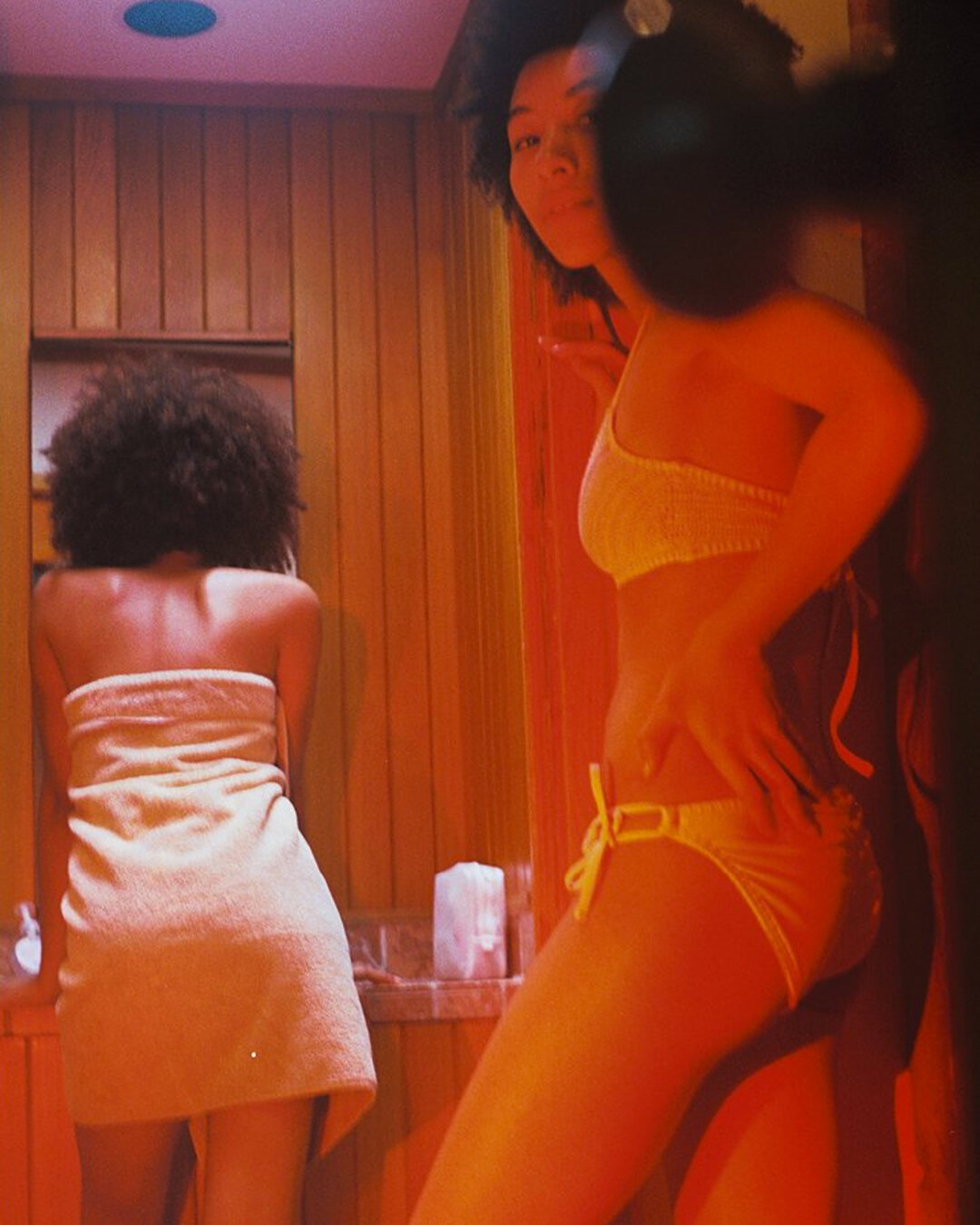
Image courtesy of Offshore Agency.
“ I feel like women are just better. They’re smarter, they work hard, I don’t know. Just better company.”
Black and other marginalized voices have always been here and have always had ideas worth hearing. Given that the models you represent are predominantly Black and women of color, would you say their voices need to be amplified or heard?
I think their voices need to be amplified. That’s especially why the “More Than a Face Documentary” is meant to give them a voice and platform to speak on whatever they want. A lot of them have been talking about recent events, police brutality, and their different experiences. I definitely think their voices need to be heard and amplified. Hopefully this starts that initiative to go forward with it.
With business recently slowing down for Offshore, how do you all plan to remain relevant within the heightened digital age across all sectors of the brand?
Before [the pandemic], we threw parties and events. That really helped us be a part of the conversation. We were more than just an online presence. Now that we can’t really do events like that, I’m definitely going to give the talent a platform for them to voice themselves. We’ll be focusing more on the talent in ways other than photoshoots and really getting under the surface to get to know them and inviting them to showcase their talents and interests.
Pretty much the “More Than a Face” documentary you were describing?
Yeah, that. Just continuing that in different forms. I think a lot of agencies don’t really have personality. I want to give personality to the brand through the models and their voices. That’s how I plan on keeping things interesting and staying relevant in the industry.
Aside from strategizing new ways to engage, have you all had to adjust to anything in particular as a result of the times?
Not anything drastic that anyone else isn’t dealing with. Outside of work slowing down and photoshoots stripped down with less people, masks, and really small sets, no. We don’t have an office, so it’s not like we suddenly lost our space and had to work from home. It’s kinda always been a work from home, very DIY thing. Luckily, it’s been like this and we didn’t really have to go through anything drastic.
Image courtesy of Offshore Agency.