
Washington Heights rapper Lengod splits the difference between culture and upbringing
By Chioma Nwana
Hailing from the culturally rich, predominantly Latinx Washington Heights, Lengod grew up adjacent to The Bronx—the borough that birthed hip-hop. Since discovering his lyrical abilities, the Uptown rapper has committed himself to embodying the fullness of both his Dominican roots and his New York City upbringing.
In honor of the release of his two singles “Frío” and “Deadass” and ahead of his sophomore album Nature Boy, we sat with Lengod to discuss his journey to music, self-discovery, and staying connected in the midst of the pandemic.
Lengod, photographed by AANA. Style by Jonatan Mejia, hair by Cassie Carey.
Who is Lengod, really?
Lengod is a rapper from Washington Heights, New York—born and raised—and an all-around artistic guy. I just love making music. That’s all I do, really. I’m just trapped in here. The quarantine made it easy for me. I just stay inside.
I have a vision of giving my thoughts and ideas on things that happen around the world through music.
For our readers living outside of New York City, can you explain where Washington Heights is and what the term “Uptown” means?
Uptown is literally just the upper part of Manhattan, specifically. If you’re from the city, you know that Manhattan is broken into parts—uptown, midtown, downtown. I’m from Washington Heights, which is all the way at the top. Near 190th Street. It’s a predominantly Hispanic area—I’m Dominican myself—but it’s a wide variety of people here, so you get to see life through the eyes of other races and cultures as well.
How did this whole music thing start? Was this something that you always wanted to do, or did it catch you by surprise?
When I was younger, my mom would play bachata loudly in the house. We would listen to a lot of Spanish music. My sister would put me onto all types of genres—I would listen to rock, reggaeton, rap, and R&B. I also tried to teach myself different instruments.
“I have a vision of giving my thoughts and ideas on things that happen around the world through music.”

How did that go?
I tried teaching myself guitar. Guitar is probably the hardest instrument to learn. But I know how to play a little bit of piano. I still try to teach myself more here and there. I also wanted to get into drumming when I was younger, but I never had the chance to.
High school is when I when I started realizing that I wanted to become a hip-hop artist. I would write a lot—I was also staying true to the things that I wrote. I didn’t want to write anything that was cap, so I kept it to topics that I experienced and things that were around me.
I’m glad that you brought that up. There’s a whole lot of cap in the music industry. A lot of people are making music about lives that they never lived.
If you want to make music about gun toting, it’s cool, if you’re living it. But I know you, bro. You’re not doing those things. I don’t really judge people for it. They could do it, but that’s not the image I’m trying to portray. It’s about the art for me.
You dropped your debut project Balance about two years ago, you’ve just released two singles “Frío” and “Deadass,” and you’re working towards the release of your sophomore effort Nature Boy. Talk to me about that.
In regards to Balance, I actually recorded the whole thing here in my room. I used to only record here because I didn’t have money to go to studios back and forth. I only had money to mix and master my music. I would record everything here and bring the sessions over.
Since I’ve gotten such good feedback from Balance, I’m looking to put out my sophomore project Nature Boy. I really wanted to put more money and effort into it so that more people can hear it.
Going onto Nature Boy is taking a step forward artistically. It’s me growing as an artist—no pun intended with “nature.” It’s a New York story about growing up here and being a product of my environment. That’s what it’s about. It’s definitely a step forward.
“If you want to make music about gun toting, it’s cool, if you’re living it. But I know you, bro. You’re not doing those things.”
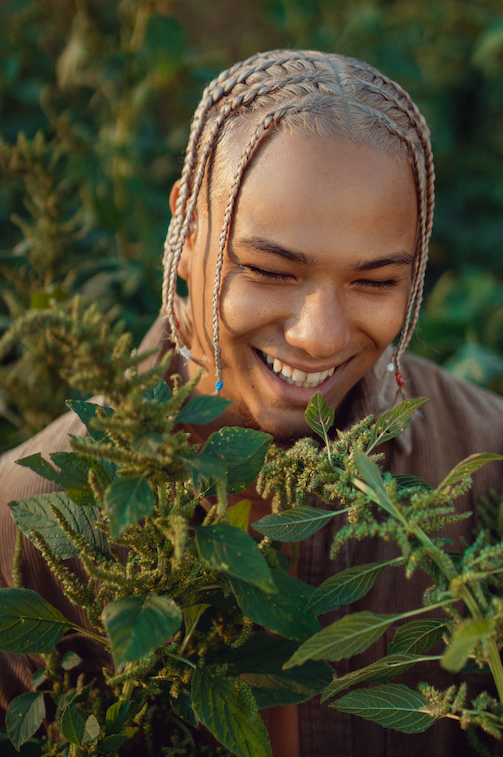

Though you grew up in the middle of a city, you’ve really taken ownership of the “nature boy” persona—you’re frequently in the woods, in the mountains, and at the beach. When did you discover that you thrive in natural environments?
It’s always been in me. I’ve been told that I give off a tropical vibe. Part of it was from being in the Dominican Republic, seeing a lot of beautiful beaches, and exploring the campo—which is basically the rural areas that we have over there.
Growing up in the city, I felt very congested with all the cars and buildings. I needed something that would open my mind and help me feel free. I started taking hikes about a year ago, and at that time, I had already started working on this upcoming project. I was writing about the city, but I wanted to include something different.
I was hiking one day and began to connect with the world and environment. I started writing lines that were double entendres between nature and the city. I actually have a song called “Hike” about climbing the ranks in the city, but it also refers to nature.
It’s no secret that artists have been hit hard by this pandemic. However, it’s been really fun to watch artists find creative ways to put out music and engage with their audiences, despite the isolation. How have you been navigating the pandemic?
I try to push out my stuff in the most creative ways possible. I’m actually also a producer—I produced a lot of the songs on the project myself and produce on the side, too. I taught myself how to produce over the years, and I feel like I’m getting better and better.
One of the main things that I did over the pandemic was called “Quarantine Cookup.” I would cook up beats on Instagram Live and give them away to my followers. I’d say, “DM me, and I’ll email you the beat.” I wanted people to recognize me for my production as well for my lyrics.
Also, when studios weren’t available, it was hard to do features or pay for studio time because they weren’t open. So I tried to connect with other artists from other places, like Mikey Polo from the DMV area—he’ll actually be on the song “Uptown” from the project. It was a whole lot of emails back and forth, but we did a good song. It was dope because we mixed New York City with the DMV.
It’ll be interesting to hear him on the song, considering that it’s called “Uptown.” The title itself is quite specific to New York City, so I’m looking forward to hearing how he handles his verse.
He killed it, man. He’s a dope artist. It reminded me of when Jay-Z and Lil Wayne combined New Orleans with Brooklyn on “Hello Brooklyn.” Lil Wayne isn’t from Brooklyn, but Jay is, and he brought Wayne into that world. That’s the way it felt.
Hip-hop is integral to the history and current culture of Uptown. How did growing up in Washington Heights influence your artist sound and style, if at all?
It definitely did. I live right across the bridge from where hip-hop originated—The Bronx. Washington Heights is known for loud music playing outside. I would listen to a lot of rap and a lot of reggaeton. I love Spanish music—especially contemporary Spanish artists right now. Even the ones who originated here.
I try to use bilingual aspects in my music. I have a song called “Frío,” and the hook is in Spanish. Another title track is “Perico,” and that’s another one with Spanish in it. I try to mix my Dominican heritage and my New York culture into one. I also try to make songs that have meaning, but you can bump to them, too. “Deadass” could definitely take off in the city. We haven’t had a New York anthem in a while.
“I try to mix my Dominican heritage and my New York culture into one.”
Recent discourse on the music industry has entailed record label contracts, larger streaming service payouts, and relationships between older rappers and younger rappers. Do any of those things matter to you? Are there any changes that you want to see?
Now, more than ever, there’s a community in the rap game. Everyone is intertwined with each other—old and new. Nowadays, I feel like a lot of new rappers are making music with the old rappers. As far as streaming goes, the numbers could be a bit higher for artists. A lot of artists aren’t getting paid what they’re supposed to, and sometimes they give too much to labels, percentage-wise.
But I feel like a lot of people are starting to understand the game and understand how they can connect with their artistry. Spotify and Apple Music give artists the tools to build fan bases, which is the best part. When you have loyal fans, your streaming numbers will go up and be beneficial to you. That’s what I’m focused on.
As someone from New York City, the home to so many rap OGs, how do you feel about the connection or disconnect between their generation and your generation that’s coming up right now?
I feel like there’s a disconnect. It’s not a huge disconnect, but it’s prevalent. Certain OGs don’t realize that they were once in our shoes. The game is completely different now. It’s turned into a streaming battle—people are more focused on trying to get recognition and clout than they were before.
Back then, you couldn’t just click one button on your phone and have an artist’s entire catalogue. It just wasn’t like that back then. But I feel like a lot of artists have a common goal, and that’s survival. Everyone who comes out of New York has a hustle and drive to push out music.
“I feel like a lot of artists have a common goal, and that’s survival. Everyone who comes out of New York has a hustle and drive to push out music.”
Do you think that you’ve grown or changed—sonically and personally—since you released your debut?
The first release was more about what’s within myself and my anxiety. I go through a lot of anxiety in my life. I feel like everybody does, but people are afraid to talk about it. I feel like talking about it is the best part because you start feeling better within yourself.
I’ve definitely grown from that project. I’m way more sure of myself. I’m confident in what I’m doing and know that this is a project that people want to listen to, you know? I grew from that music-wise, but I also grew personally within myself. I understand why I feel certain ways, and I’m pushing myself forward. That’s my favorite thing about music. I’m able to grow within myself and grow with my music.
If the pandemic were to suddenly end tomorrow, what’s the first post-covid thing that you’re doing with your music? What about in general?
Definitely throwing multiple events for my music, safely. I want to throw events and shows. I’m looking forward to performing—I love performing. I think that’s like my favorite thing to do as an artist. Front-to-front connection with fans is the best thing. I can’t wait for venues to start opening up so that I can try to get shows, even if I’m opening for other artists.
In general, I need a vacation. It’s about time. Being locked up here for so long has me ready to go. Before covid, I had plans to go to the Dominican Republic, and I had a couple other places that I wanted to go to. It didn’t fall through, clearly. Hopefully, things change soon.