
COVID-19: immersive technology may be the future of music programming
By Chioma Nwana
If we weren’t already in the middle of a digital renaissance, then we definitely are now.
As declared by the World Health Organization (WHO), we’re in the middle of a pandemic. COVID-19 has forced the entire country into a state of emergency, and we’re all feeling it. The number of cases and deaths is increasing at an exponential rate, and there’s no clear end in sight. The burden of the virus weighs heaviest on the shoulders of this country’s most marginalized groups and is exposing the United States as a failed system finally caving in on itself.
It’s also become painfully obvious that resources and structural changes previously dubbed unavailable and unrealistic are both available and well within reason. We have observed that universal access to healthcare is actionable; housing can be provided to folks facing homelessness; many companies can, in fact, afford to offer their employees paid sick leave or hazard pay; there is considerable latitude for delayed loan, rent, and tax payments; and granting incarcerated folks clemency is not too much to ask of the Department of Justice.
[Read: COVID-19 poses a heightened threat in jails and prisons]
Many news outlets and publications detail the myriad effects and implications of COVID-19 on the economy, politics, education, healthcare, and social equity as we know them. Few articles, however, have thoroughly explored its impact on the entertainment industry, which has been dealt a major blow as a result of nationwide social distancing. In the past few weeks, we’ve seen the cancellations and postponements of huge music events such as Coachella, SXSW, the New Orleans Jazz Fest, Afronation Puerto Rico, and Governor’s Ball. Individual artists are canceling shows, ending tours, and postponing album release events and activations.
These cancellations may not sound too devastating at first, as music artists are assumed to have multiple streams of income. However, the reality is that album sales are on a continuous decline, streaming services pay out only fractions of a cent per stream, and royalties are often unevenly split between the artists, their record labels, and their publishing houses. The indefinite postponement of live events poses a major threat to the livelihoods of artists, record labels, and music organizations alike. Everyone, from music executives to newly hired interns, is scrambling to figure out how to sustain an industry that is so heavily predicated on human interaction.
[Read: Here are all the livestreams and virtual concerts to watch during coronavirus crisis]
Entertainment is now confined to the digital world, and only those willing to experiment with new marketing methods and creative technology will see success during this time. Many artists immediately took to social media to share archived pre-pandemic footage, host at-home Instagram live performances and music battles, facilitate virtual Q&A sessions with their fans and peers, and even throw online parties with their followers. In an immediate sense, these efforts are helping artists to avoid going dark as their fans scroll through copious amounts of “quarantine content.”
But what happens when music consumers finally adjust to this new reality? If virtual programming becomes the norm, what is the next big thing? How will artists distinguish themselves from their peers?
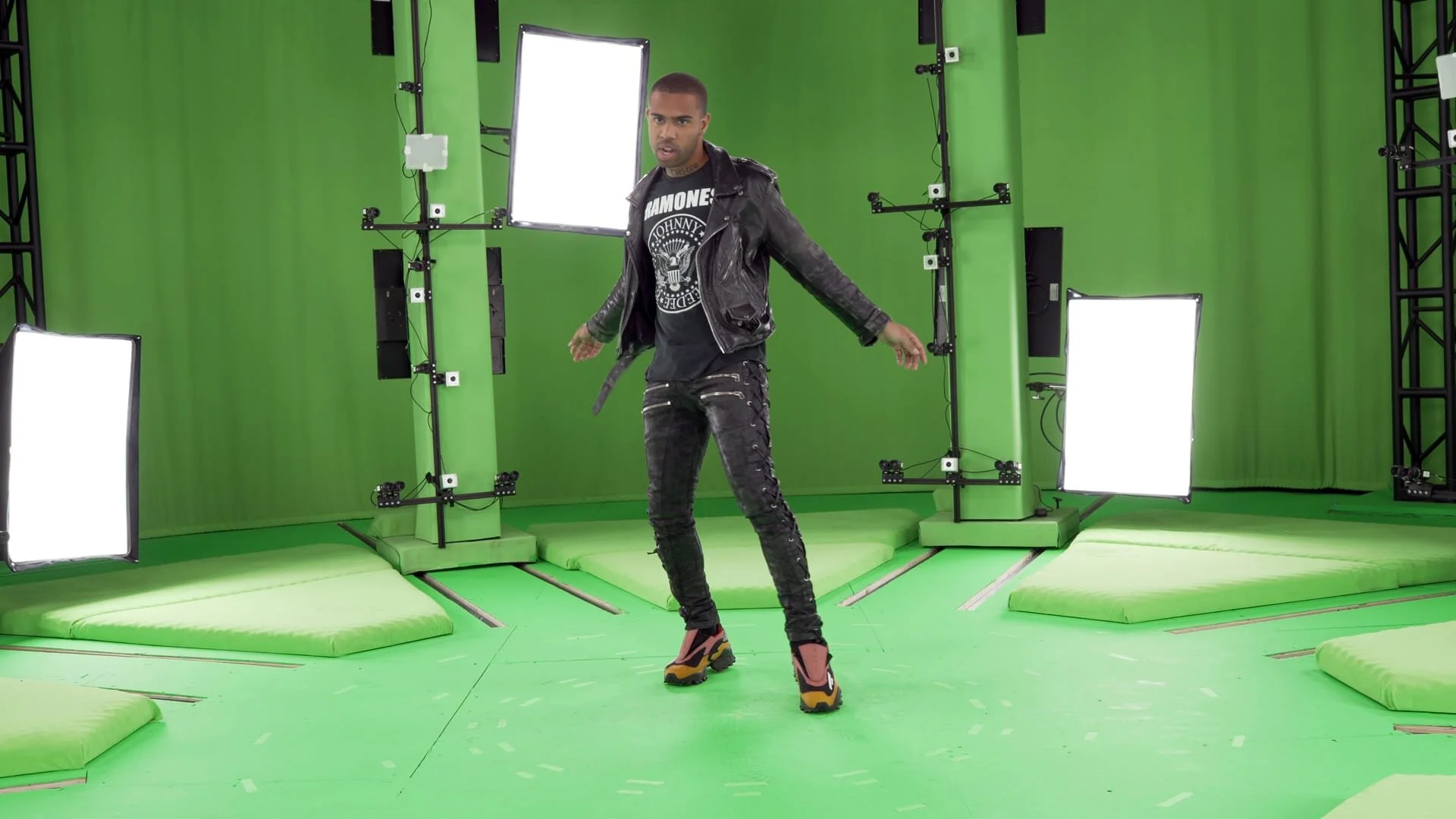
This is a time for artists to dig deeper into their online platforms and offer their fans more immersive virtual experiences: virtual reality (VR), augmented reality (AR), and mixed reality (MR) are three forms of immersive technology that combine the real world with computer-generated elements. VR is an immersive experience that places users inside of a computer-generated world, often via specialized headsets. It can be used by surgeons to practice future surgeries or by educators to teach students about inaccessible environments such as outer space and the deep sea. AR is a semi-immersive experience that allows users to superimpose virtual objects onto a real-world setting. Accessible via smartphones, tablets, and specialized glasses, AR is a regularly used form of immersive technology — think of apps like Snapchat, Pokémon Go, or, most recently, Jadu, an app that projects realistic three-dimensional videos of music artists onto real-life videos of app users dancing to their songs. MR is another semi-immersive experience that allows users to interact with virtual objects within a real-world context via specialized headsets. It can be used to produce holographic images and by car manufacturers to prototype vehicles.
Currently, VR seems to be the fastest growing form of immersive technology in the entertainment industry. Even prior to COVID-19, a number of artists were already experimenting with VR programming to connect with their fans in new ways: Billie Eilish and Post Malone, for example, have streamed concerts via Oculus Venues, a VR platform acquired by Facebook; Violinist Lindsey Stirling teamed up with Wave, a multi-channel VR concert platform, to host a performance starring her very own VR avatar controlled by Lindsey in a motion capture outfit; and Ed Sheeran and Lil Uzi Vert streamed a 360° version of their 2017 VMAs performance via YouTube’s VR platform. Record labels such as Universal Music Group (UMG), Sony Music Entertainment, and Warner Music Group (WMG) have signed distribution deals with pay-per-view VR music platform MelodyVR. As immersive technology increases in popularity, music consumers are likely to develop a penchant for more interactive video experiences and gravitate towards artists who provide them.
Some event producers have expressed fear that the convenience of experiencing virtual shows may overshadow the appeal of attending events in-person and discourage fans from purchasing live show tickets. In a recent interview with CNN Business, Steve Hancock, co-founder of MelodyVR, counters these concerns. He assures skeptics that there will be no negative impact on live show ticket sales, as he believes that people will always attend live events if they can.
Hancock uses can lightly. However, within the context of the future of music, the word is quite urgent. As the entertainment industry evolves, it is imperative that accessibility evolves with it.
Right now, the vast majority of live events are limited in a number of ways. For starters, there are basic limits as to how many people can attend any show — only so many people can occupy a space, be served, or be supervised. More importantly, live show attendance can be restricted by several factors, such as age, distance, ability, cost, time, and general venue inaccessibility.
While event producers work towards hosting more accessible live events, there are ways to practice inclusivity in the meantime. Providing fans with the option to participate virtually in live events will prove beneficial to all parties involved — fans who cannot attend live shows can still watch their favorite artists perform, often from vantage points that wouldn’t be possible live (i.e.: on stage, backstage, aerial, etc.), and artists can make more money by selling virtual show tickets in addition to live show tickets.
[Read: Are your music events accessible and inclusive? Here’s how to make sure]
Possibilities are endless for immersive technology. Many of the largest names in tech have already acquired and financially supported immersive technology or created their own: Oculus was acquired by Facebook for about $2 billion; Google created its own VR platforms, Google Daydream for a fully immersive VR experience and Google Cardboard to be used with your phone; MelodyVR has accumulated more than $90 million in financial backing. As the market for immersive technology continues to expand, prices of hardware and software will drop, making it accessible and affordable for more people. Presently, many VR, AR, and MR apps are already free, and although many standard headsets are in the triple digits, you can purchase a simple cardboard VR headset from Google Cardboard for $15 and from other merchandisers for as low as $5.71. Additionally, MelodyVR is working on its own VR headset to be priced at about $20.
As the uncertainty surrounding the COVID-19 timeline increases, there is a growing urgency amongst artists to find tools and resources to host and participate in virtual programming. Cherie Hu — an award-winning writer, speaker, and researcher specializing in the tracking and critiquing of innovation in the music industry — created a free virtual music events directory to introduce alternatives to in-person programming. She shares and invites others to contribute to a calendar of virtual events hosted by artists and music organizations alike. She also offers a list of tools that may be useful to anyone planning their own virtual events. In her words, virtual programming is “now arguably one of the most practical paths forward for performing artists in the wake of virtually no other alternative.”
Hu references other VR platforms, such as AltspaceVR — a virtual educational platform geared towards larger-scale networking and entertainment events — and Sansar, a virtual show platform through which fans can purchase merchandise, sign up for meet-and-greets, and take selfies with performing artists. For those not quite ready to make the jump into immersive technology, there are other interactive platforms, such as Instagram Live, Twitter Live, and Netflix Party, a Google Chrome extension that enables users to watch Netflix shows and movies in sync and communicate via a single chat room. Hu’s directory also features a lengthy list of interactive alternatives such as Run the World, a live streaming platform for large events and conferences with fireside chat and virtual party features, and Looped for virtual meet-and-greet video sessions during which fans can take photos and videos with artists.
We have a unique opportunity to revolutionize the way that we approach event production. Virtual programming is no longer optional or reserved for specific types of people, as it has, almost overnight, become crucial for survival in the face of COVID-19. Beyond this crisis, it’s a necessary step in the direction of music globalization — in order for this industry to broaden its horizons, it must prioritize inclusion and ensure that all fans have equal access. Even outside of the entertainment industry, companies, brands, and individuals who are willing to explore and embrace the technology available to them may be setting the precedent for years to come.
--
Looking for ways to offer aid during this time? Share or contribute to a live document of NYC COVID-19 resources (via NYSYLC) or donate to a number of mutual aid projects across the country (via Prison Culture).